
A date change may be possible subject to availability and provided that the terms of the package/suppliers allow it. There may be an additional charge and/or a price difference. Please contact us to verify and for details.
A journey for the few. Are you one of them? To the Threshold of the Sky: The Journey to Everest Base Camp There’s a place in the world that, just hearing its name, makes you imagine mystery, adventure, and skyscrapers of rock and ice. Its name… Everest. You may not reach the summit, but the trek to Everest Base Camp is an achievement in itself. It’s not for everyone. It’s for you if you can say “yes” to the challenge, the exhaustion, and the ultimate reward. The trek itself, from Lukla to Base Camp and back, takes about 11–12 days. And it’s full of moments you’ll remember for a lifetime.
We’re landing in Nepal—a place you may have heard stories about, or perhaps even seen pictures of—but nothing compares to experiencing it firsthand. So, from the hustle and bustle of Kathmandu to the otherworldly tranquility of the Himalayas, get ready for a journey filled with positive energy, vibrant colors, oriental scents, and an atmosphere unlike anything you’ve ever experienced. You’ll get to know Nepalese culture, wander through temples and bazaars, and see how the Sherpas live on the slopes of the Himalayas. You’ll lose yourself in landscapes that seem otherworldly and discover aspects of yourself you never imagined existed.
To begin your adventure toward Everest, you’ll fly in a small plane to Lukla. It will likely be the most thrilling and exciting flight of your life, as the runway is perched on a mountainside. From there, you’ll set off at a leisurely pace toward Phakding, a charming little village beside the Dudh Koshi River. The scenery around you is already beginning to change: the air is crisp, the people are smiling, and the colors are more vivid. The next day, you’ll head uphill toward Namche Bazaar, the lively commercial hub of the Sherpas. The third day is dedicated to acclimatizing to the altitude. You’ll stay in Namche, but take short excursions to nearby spots. This is the time to learn to listen to your body and give it time to adjust. Next, you’ll head up to Tengboche, with its impressive monastery towering over the valleys, and then on to Dingboche, where you’ll stay another day to acclimatize further. Here you start to feel something strange, as if you’re walking on another planet. Further up, in Lobuche, breathing becomes more difficult, but every step brings you closer to your goal. And then comes the day you’ll never forget… Arrival at Everest Base Camp. You’re at 5,364 meters, where expeditions to the roof of the world begin. There are no words to describe what you feel. Only silence and respect. You spend the night in Gorak Shep, and the next day, before the sun even rises, you set out for Kala Patthar. From there, you’re treated to the clearest, most breathtaking view of Everest. This is the moment when everything makes sense. From here on, the return journey begins, with overnight stays in Pheriche, Namche Bazaar, and finally in the familiar Phakding, before you end up back in Lukla. The final flight back to Kathmandu will find you… a changed person. You’ve walked in the footsteps of “legends,” you’ve overcome fatigue, and you’ve come to know yourself on a whole new level. This is not just a hike, but a spiritual, physical, and mental journey through the world’s most majestic mountain landscape.
Please note! Before booking this trip, keep in mind that changes to the itinerary are possible, as flights to and from Lukla may be canceled due to weather conditions. In this case, the itinerary will be adjusted accordingly.
Thessaloniki "Macedonia" Airport (Google Maps)
We meet at the airport—all of us who share the same spark for adventure and that little bit of madness it takes to say, “I’m off to Nepal and Everest.” From the very first moment, you know this isn’t just any ordinary trip. You’re not just changing countries—you’re changing eras… Yes, you read that right. Nepal’s calendar is almost 57 years ahead of ours. While you say you’re living in 2026, over there it’s already… 2083. So, get ready to literally fly into the future. Now, this future doesn’t have artificial intelligence—or maybe not even… good Wi-Fi. In fact, the internet in Nepal is among the slowest in the world. But that’s an opportunity to disconnect from emails and notifications. To connect with the mountains, the people, and yourself. To see with your own eyes rather than through screens, to hear the sound of the wind rather than your cell phone. This isn’t just a trip. It’s a fresh start. A little “reboot” that takes you far away—not just in kilometers, but in experiences and emotions.
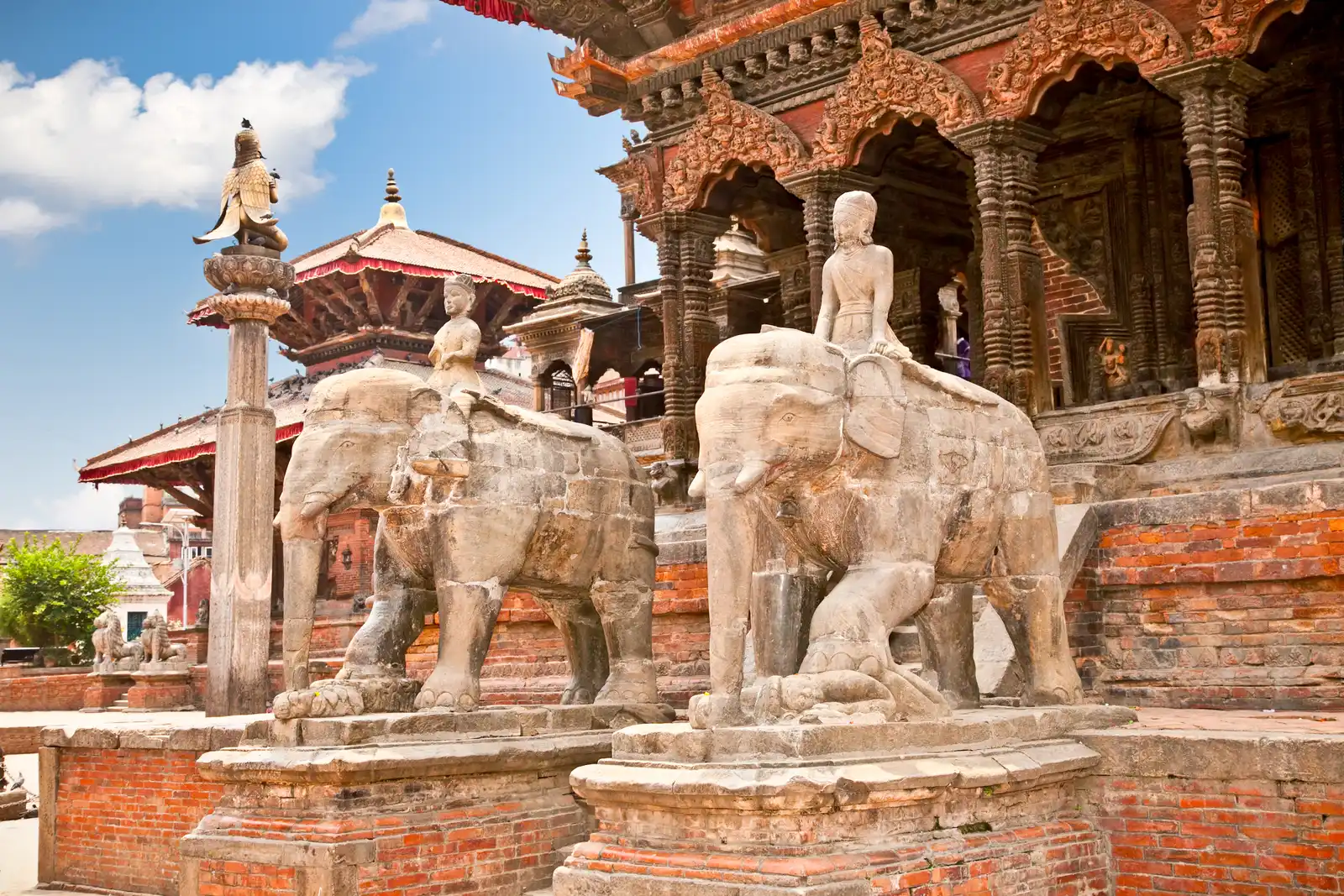
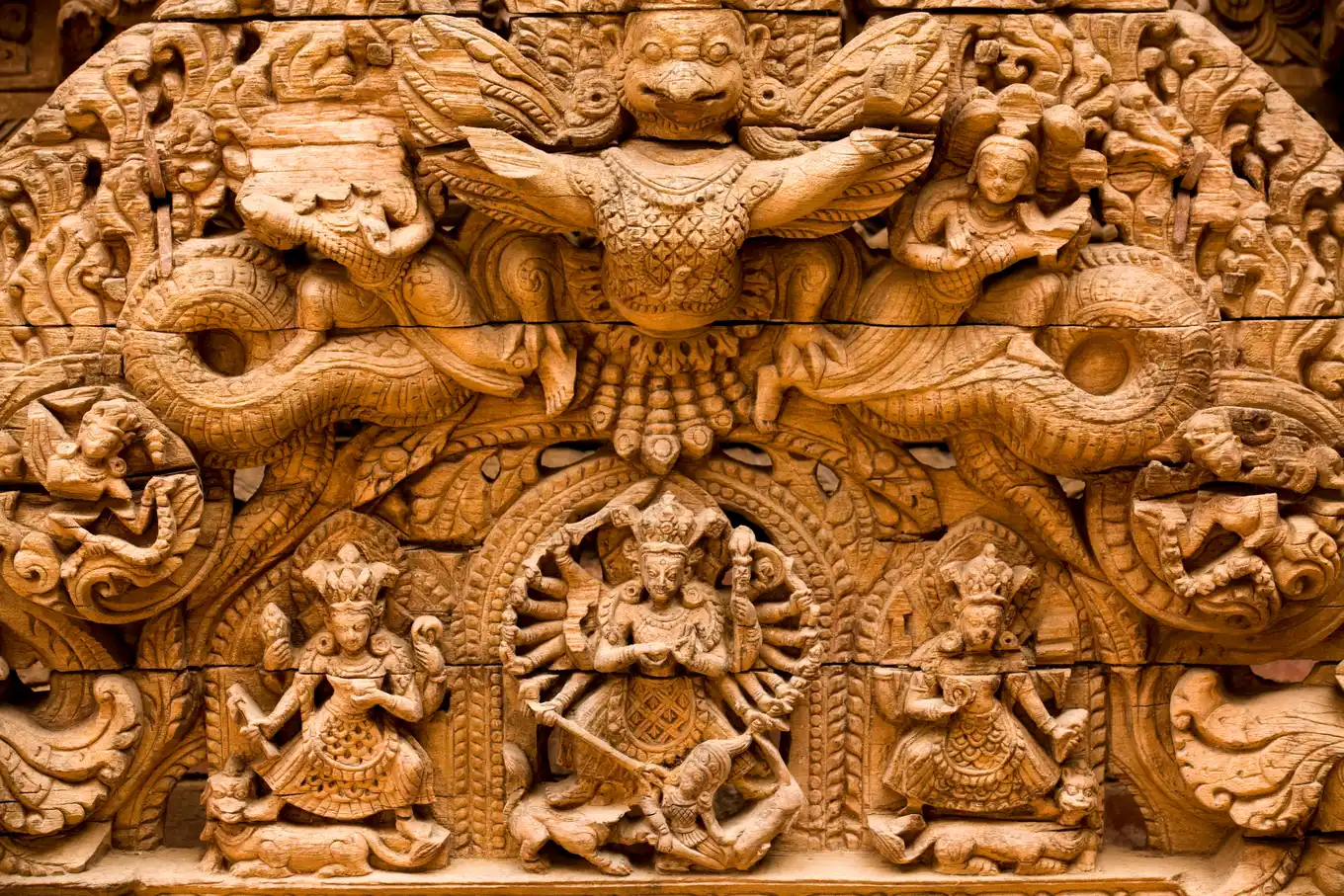
From the very moment you arrive in Nepal, you’ll sense a different atmosphere. Even before you’ve really seen or experienced anything yet, the smiling people, the peaceful monasteries, and the serenity are bound to leave an impression on you, helping you appreciate this destination. Since it’s still too early to check in at the hotel, we don’t waste any time and head out to explore the city and some of its most beautiful sights. Kathmandu is famous for its “World Heritage Sites”—there are seven of them within a 15-km radius! We’ll start at Durbar Square, where ornate temples, vibrant colors, and enticing scents will truly immerse you in the country’s atmosphere. Nearby is Kumari Bahal, the palace-residence of the “living goddess” Kumari—if we’re lucky, we might even catch a glimpse of her. But that’s enough for now. We’re heading to the hotel, where you’ll have time to rest. Don’t miss out on enjoying a Ayurvedic massage—perfect after the long flight and before the busy days ahead. In the evening, we’ll head to the city’s bustling hub, Thamel, where we’ll have dinner and get to know each other a little better. Tonight we’ll be staying in Kathmandu.
Today we’re heading to the old city of Patan. To the south, the separate municipality of Patan, although part of the greater Kathmandu metropolitan area, was once the capital of an independent kingdom. It has its own quieter and better-preserved historic district, characterized by numerous Buddhist bahals (monastic complexes, some of which are still active) and a community of foreign residents, mainly staff from international NGOs and charitable organizations. These neighborhoods represent only a part of a complex and eccentric city, which also includes slums, dilapidated government buildings, isolated suburbs, and bazaars. We continue by road (7 hours) to Ramechhap, from where, the next day, we’ll take our flight to Lukla.
The day begins in one of the most exciting ways possible. You board a small plane and fly to Lukla, one of the most famous and legendary airports in the world, literally perched on the slopes of the Himalayas. The flight lasts just 30 minutes, but the sense of adventure begins the moment you take off. Snow-capped peaks, deep valleys, and clouds that seem to “swallow” you as you approach the mountain come into view through the window. Upon arriving in Lukla, you begin your first hike. It’s a relatively easy and short trek to Phakding, passing through small villages and across little bridges over the Dudh Koshi River. It’s the perfect introduction to what lies ahead. And just like that, your journey into the “world of Everest” begins. With your first step on the trail, you leave everyday life behind and set out toward something much greater. There, in the peaceful village of Phakding, you’ll relax for the first time to the rhythm of the Himalayas.
The day begins with excitement and energy, as you now enter the “heart” of the trek to Everest. The ascent to Namche Bazaar is one of the most challenging—but also one of the most exciting—parts of the journey. You’ll hike through forests, accompanied by the sounds of the Dudh Kosi River. The trail leads you to imposing suspension bridges, the most famous of which is the Hillary Suspension Bridge—a true experience for those who love adventure and heights. As the altitude increases, you begin to feel the oxygen thinning and your breaths become shorter. But your effort is rewarded… Just before you reach Namche, weather permitting, the legendary peak of Everest is revealed before you for the first time—a breathtaking sight that gives you a new burst of energy. Namche Bazaar, the “capital of the Sherpas,” appears like a colorful mosaic built into a natural amphitheater nestled among the mountains. Filled with small shops, cafes, bazaars, and lodges, it exudes warmth and hospitality in this remote highland region of the world.
Although the trek to the next villages is temporarily on hold, today is extremely important for the success of your mission. You’ll stay in Namche to acclimate to the altitude—a day that may seem relaxed but is actually crucial. You’ll follow a circular route that gradually takes you to higher elevations, such as the Everest View Hotel, where you’ll enjoy a panoramic, unobstructed view of Everest and the surrounding peaks. Returning to Namche to sleep at a lower altitude is a strategic move that helps ensure a smooth acclimatization. During the day, you can also visit the Sherpa Museum, learn about the local culture, and relax with a traditional cup of tea and a freshly baked apple tart at Namche’s famous bakery.
Today you say goodbye to the village of Namche and head deeper along the ascending trail. The scenery becomes increasingly breathtaking. You’ll walk along a narrow trail that offers stunning views of the peaks of Ama Dablam, Lhotse, and, of course, Everest, which looms in the distance. The route has many variations—gentle descents and steep ascents, always through forests that seem magical. Eventually, you arrive at Tengboche, a picturesque village that is home to the region’s most important Buddhist monastery.
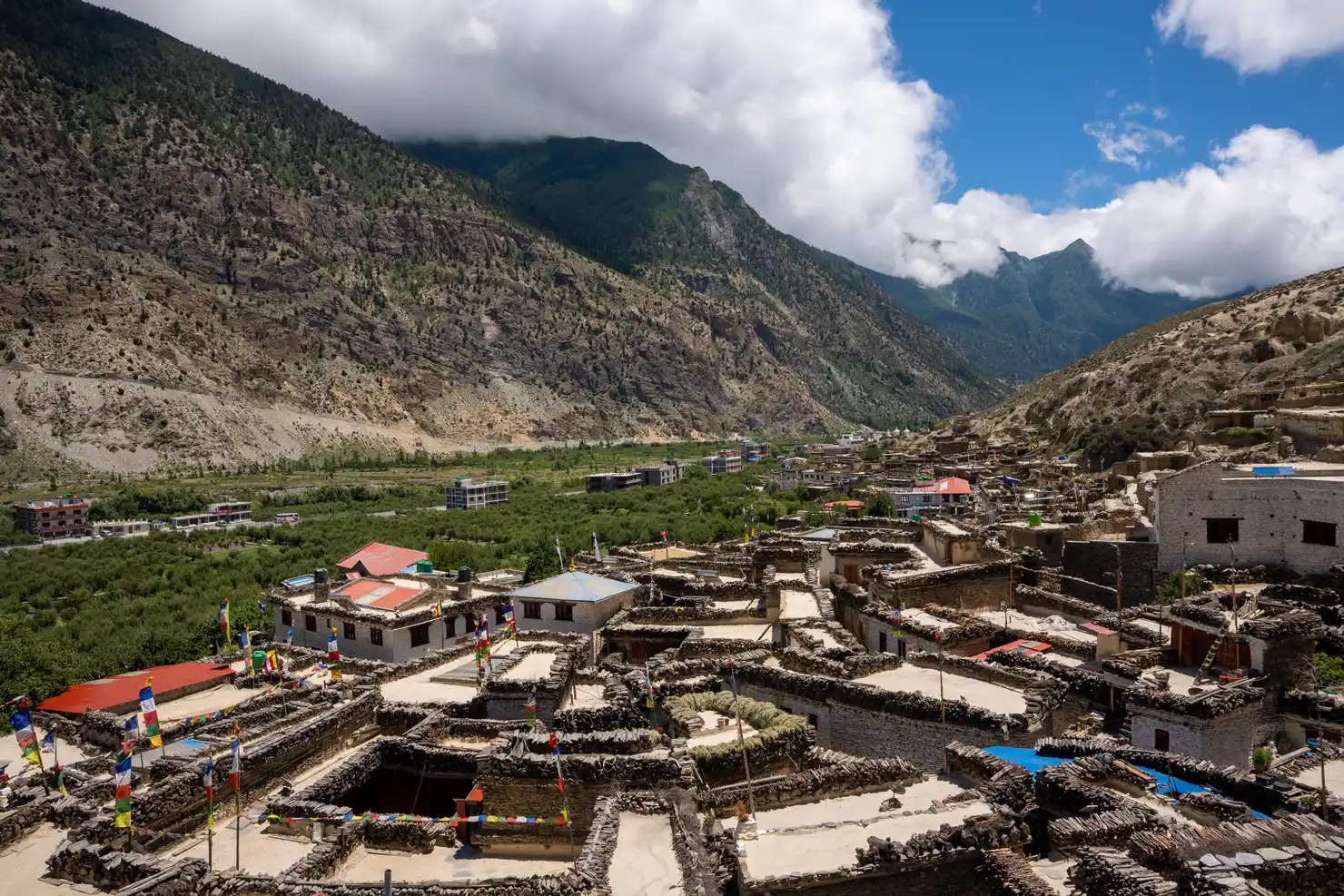
As you continue toward Dingboche, the landscape changes noticeably. The trees become sparser, the air grows colder and thinner, and nature takes on an almost otherworldly character. You pass through small villages, stone walls, and religious structures featuring mani stones—Buddhist prayers carved into rocks that reflect the Sherpas’ deep reverence for the mountain. Dingboche welcomes you as a serene, wind-sheltered plateau with breathtaking views of Island Peak and the surrounding peaks. Here, every step becomes slower and more deliberate, as the altitude serves as a reminder of the challenge of the expedition.
Staying in the village of Dingboche for one more day is crucial. You’ll hike up to the surrounding hills, such as Nagarjun Hill, which reaches 5,000 meters, to build up your physical endurance and allow your body to acclimate to the new conditions. The effort is intense, but the time you spend acclimatizing is essential for continuing your trek. The day passes more peacefully. You have time to rest, look around with greater awareness, and enjoy the sun as it gilds the snow-capped peaks.
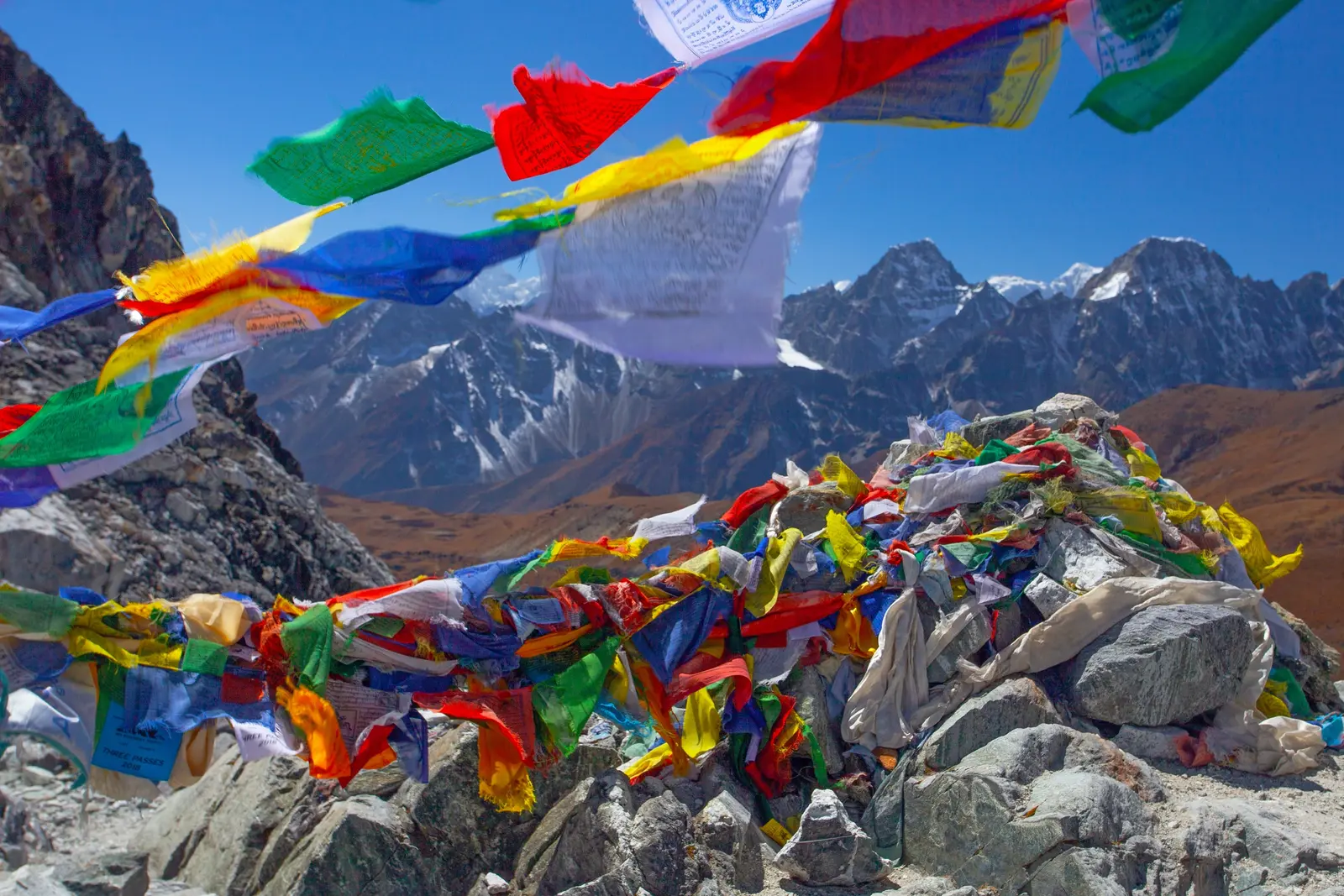
Today you set out from the village of Dingboche, feeling refreshed, and head toward Lobuche. The trail becomes more dramatic as the landscape begins to resemble a lunar landscape, full of rocks, glaciers, and dry air. You’ll pass by the memorial to fallen climbers, a poignant site filled with small plaques and flags dedicated to those who lost their lives pursuing the dream of reaching the summit. Lobuche is a small, isolated settlement, and staying here brings you even closer to your final goal.
The long-awaited day has arrived. First, you arrive at Gorak Shep, drop off your belongings, and then set off for Everest Base Camp. The route is tough, but breathtaking. You walk across glacial fields and jagged rocks, with the Khumbu Glacier stretching out like a living organism right beside you. Upon reaching the base of the world, at 5,364 meters, the emotion is intense. You can’t see the summit from here, but you feel the energy of a place where dreams are born and stories are written. You return to Gorak Shep to rest, your heart full.
You wake up before dawn, amid the cold and silence, and set out on one of the most challenging parts of this trek: the ascent to Kala Patthar. It’s not just a peak, but your natural vantage point at 5,545 meters, where your gaze meets Everest unobstructed, clear, almost otherworldly. The first rays of light bathe the world’s highest peaks in golden light, and for a moment, everything stands still. It’s as if you’re holding a piece of the world that few ever see. That image, that light, is etched inside you forever. You don’t just photograph it—you feel it with every cell in your body.
You gradually descend to lower elevations, your body tired but your soul full. The trail leads you to Pheriche, a peaceful village nestled among windswept slopes and low-lying vegetation. There, you let some of the weight slip from your shoulders, take a deep breath, and begin to realize what you’ve just experienced.
As you descend toward Namche, your breathing becomes easier and your stride lighter. It’s as if you’ve rediscovered your physical strength, but this time with one less burden… The anxiety of the climb. You recognize the places you’ve passed through, while every image is filtered through your new experience. When you arrive back in Namche, you see it differently. It’s not just a stop to rest; it’s now a point of reference. A familiar place, almost like home. A part of your journey that now feels like… coming home. After the accomplishment of reaching Everest Base Camp, something inside you has changed. You feel a strength you didn’t know you had, perhaps a sense of emotion, but also a pride that you don’t shout about, but feel deep inside, like a quiet certainty that you’ve become a part of this mountain.
The last day of the trek has a sense of farewell about it. You walk along the now-familiar trail that leads back to Lukla, where it all began. Your body protests from exhaustion, but your soul feels complete. Every step brings you closer to the end of this unique journey—one you might not want to see end. In the evening, the lodge fills with an intangible, festive warmth. No words are needed. The glances, the laughter, and the shared silences say everything that words cannot. You share stories from the journey, reliving funny moments as well as difficult ones, and personal triumphs. And somewhere along the way, you realize that you won’t return as the same person. You and the others are fellow travelers on a journey you’ll remember forever.
The flight from Lukla is short, but full of thoughts. Sitting in the small plane, you watch through the window as the peaks recede, gradually growing smaller, as if they’re saying goodbye. And then you realize it… You were there. Right there among them. You climbed, you walked, you persevered, you pushed past your limits. As the plane brings you back to Kathmandu, you feel that something inside you has changed. You’re not the same person who set out a few days ago. You’re stronger, more grounded, and you carry a wisdom that isn’t gained through words, but through steps. The rest of your day is free for rest or even another Ayurvedic massage. *There is a possibility that the flight from Lukla may land in Ramechhap instead of Kathmandu. In that case, we’ll need to travel 7 hours by road.
Today, you can optionally take a day trip to Bhaktapur (also known as Bhadgaun), one of Nepal’s three ancient capitals. This is probably what Kathmandu would have looked like before the modern world arrived in the country. Amid the cobblestone streets and narrow alleys of Bhaktapur, you might see women washing themselves at public fountains, men in traditional dress strolling about, farmers sitting cross-legged on the street selling vegetables from baskets, worshippers heading to the neighborhood shrines, and everywhere the burnt peach hue of the bricks set against the deep brown of carved wood. We continue on to Nagarkot, a town perched on a ridge northeast of Bhaktapur, at 1,950 meters, offering sweeping views of the highest peaks of the Himalayas. If you do not wish to join this excursion, you will have free time in Kathmandu, where we will spend the night. *If the flight from Lukla needs to be rescheduled to May 18 instead of May 17, the optional excursion to Bhaktapur–Nagarkot will not be available.
After sixteen full days, this journey is coming to an end—at least… geographically. Because the truth is, a part of you will remain there forever. On the stone trails of Nepal, in your interactions with the locals, in the crisp morning air of the Himalayas, and in the look in your eyes when you stood face-to-face with Everest. And most importantly? You’re not coming back alone. You’re coming back with people who have become lifelong travel companions. This trip wasn’t just a getaway. It was a reminder of what you’re capable of. And if you can make it to Everest Base Camp, you can face whatever lies ahead from here on out.
The possibility of a refund and/or any deductions depends on the terms of the specific package, the time of cancellation, and the respective suppliers. For your specific case, please review the General Terms and Conditions or contact us.
Some packages include travel insurance, or optional coverage may be available, depending on the destination and itinerary. For available options and coverage terms, please contact us or refer to the General Terms and Conditions.
The reservation is finalized in accordance with the procedure set forth in the General Terms and Conditions (e.g., confirmation and payment of the amount/deposit, where required). For specific steps and deadlines applicable to this particular package, please contact us.
The itinerary is based on available routes and services; however, changes or adjustments may occur before and/or during the trip for operational reasons and/or due to unforeseen circumstances. In any case, the General Terms and Conditions of Participation apply, and relevant information will be provided.